
Glenelg Shire 2026-2027 Budget Development
Community consultation has now concluded.

Glenelg Shire Council has adopted its 2026-27 Budget.
Thank you to everyone who took the time to join the conversation and help shape the 2026/27 Annual Budget.
The draft was informed by community feedback received during the initial consultation process, particularly in relation to new local projects, asset renewal, and future project planning.
Prepared in a challenging economic climate, the budget focuses on maintaining and renewing essential assets, delivering community-led projects and ensuring Council services continue to meet the needs of residents across the Shire.
A key priority is the renewal of ageing infrastructure, with an additional $1 million allocated to asset renewal. This investment reflects Council’s Asset Plan and the importance of maintaining facilities and infrastructure that underpin everyday life across the Shire.
You can read the full media release here
Glenelg Shire Council adopts 2026–27 Budget | Glenelg Shire Council
For more information, including detailed FAQ's or to download a copy of the Budget head to Council's Website
Annual Budget and Reports | Glenelg Shire Council
Community consultation has now concluded.
-
How your rates are calculated
Share How your rates are calculated on Facebook Share How your rates are calculated on X (formerly Twitter) Share How your rates are calculated on Linkedin Email How your rates are calculated linkWhen deciding how much it needs to raise in general rates, council considers community needs in relation to its available income for the coming year.
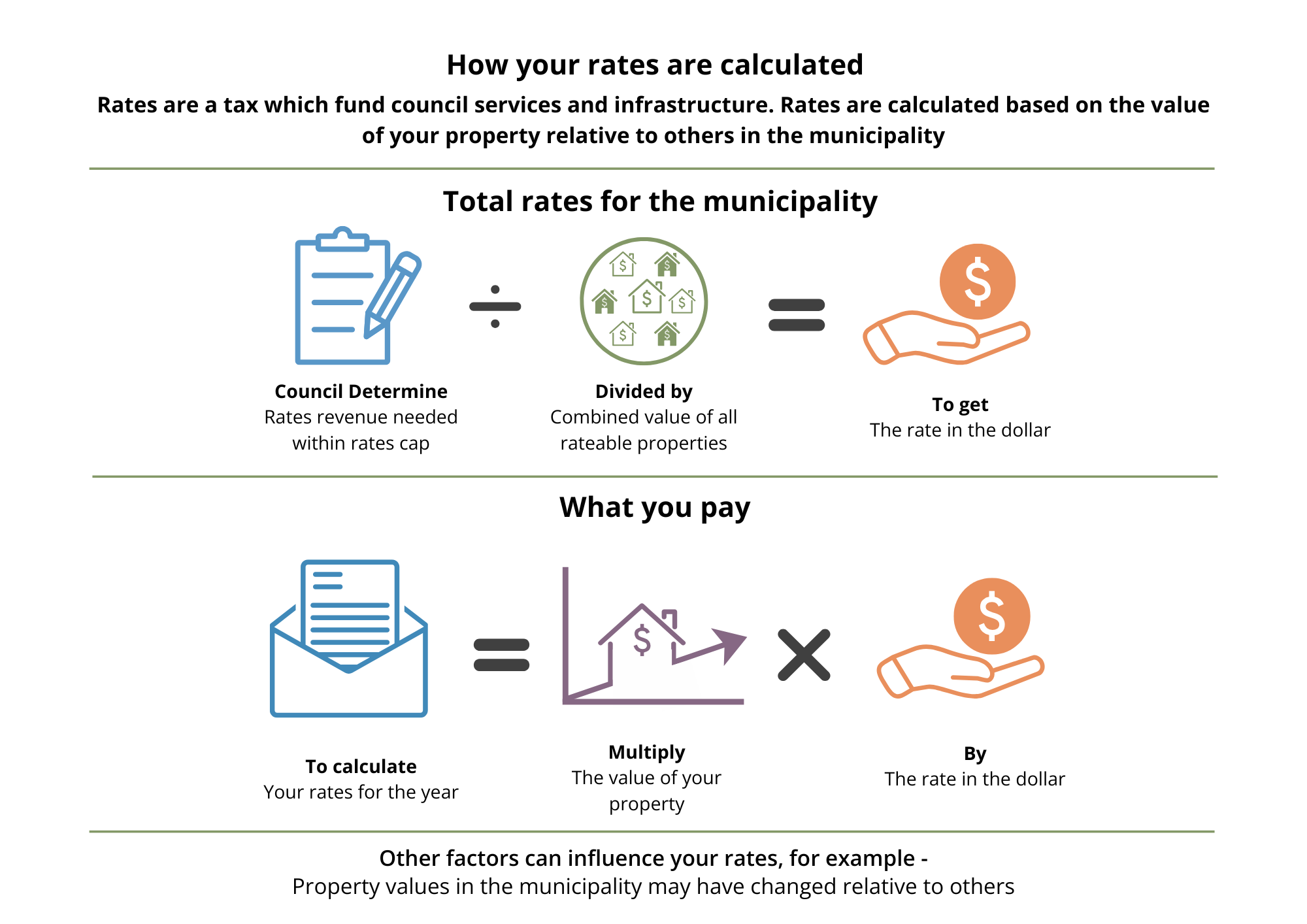
Determining how much each property pays involves determining the total amount of rate revenue required and dividing this across the total value of all properties in the municipality to establish a rate in the dollar. The rate in the dollar is then applied to each individual property’s value to calculate its rates.
Community consultation has now concluded.
-
What is differential rating?
Share What is differential rating? on Facebook Share What is differential rating? on X (formerly Twitter) Share What is differential rating? on Linkedin Email What is differential rating? linkDifferential rates are where councils set different rates in the dollar for different categories of rateable land.
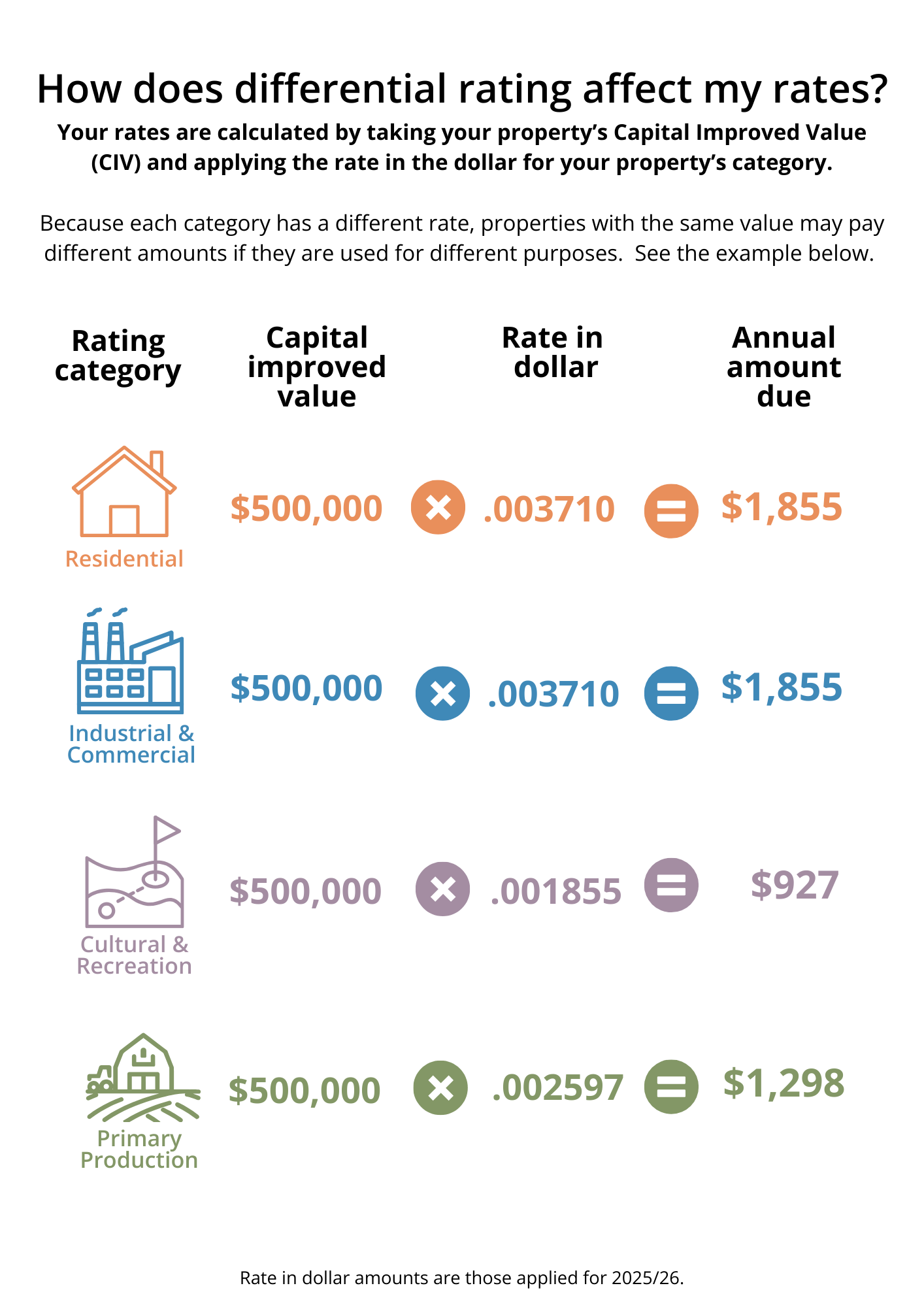
Properties are grouped into categories based on how the land is used, such as homes, farms or businesses and each category is charged a different rate in the dollar of the property’s Capital Improved Value (CIV).
Click here to find out more about how your property valued
Your rates are worked out by applying your property’s value to the rate set for your property type, then adding the rate cap. Because each category has a different rate, two properties with the same value may pay different amounts if they are used for different purposes. See the graphic below.
Source: Calculating Rates
Community consultation has now concluded.


-
Director Corporate Services

Email dhol@glenelg.vic.gov.au